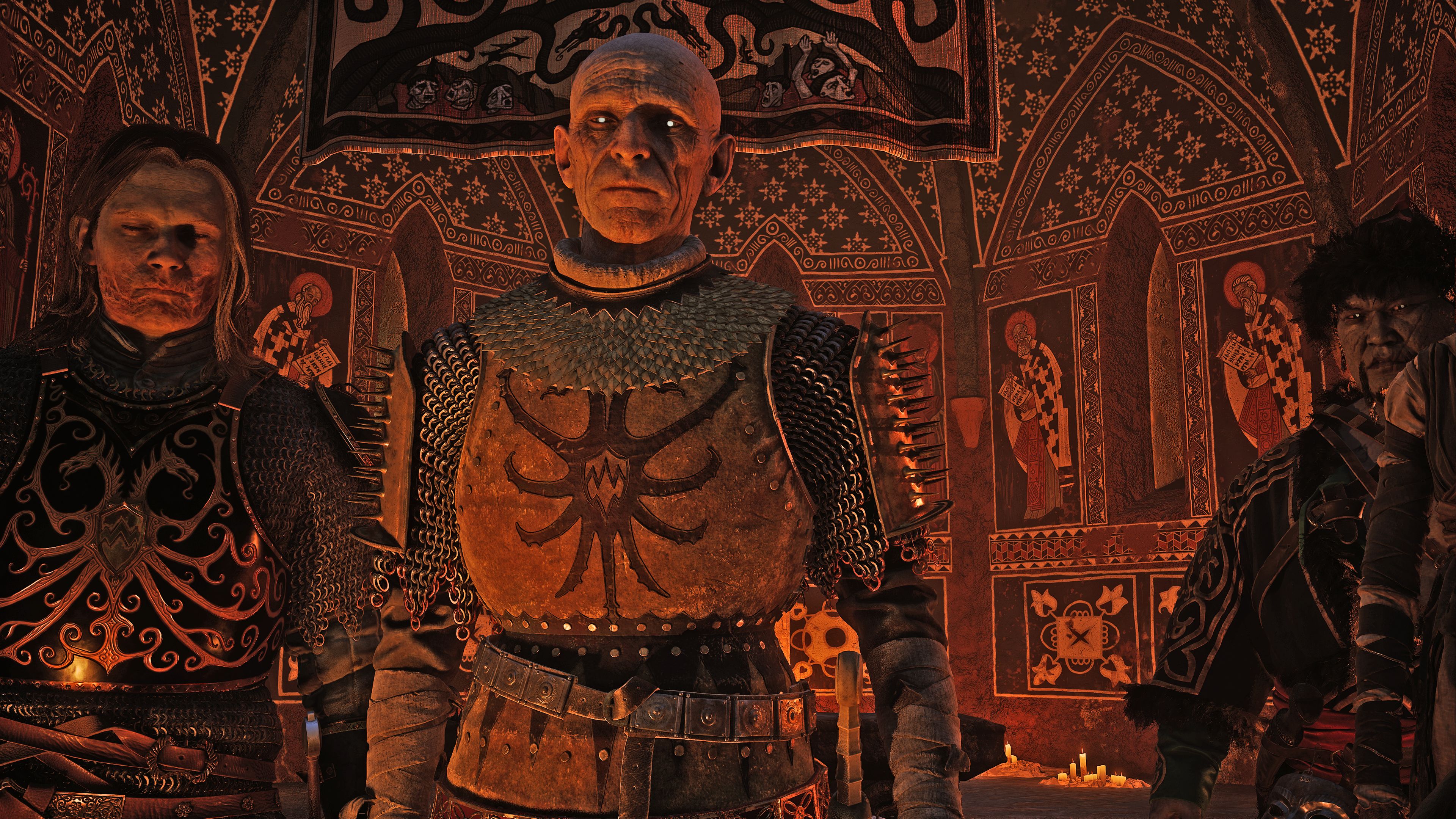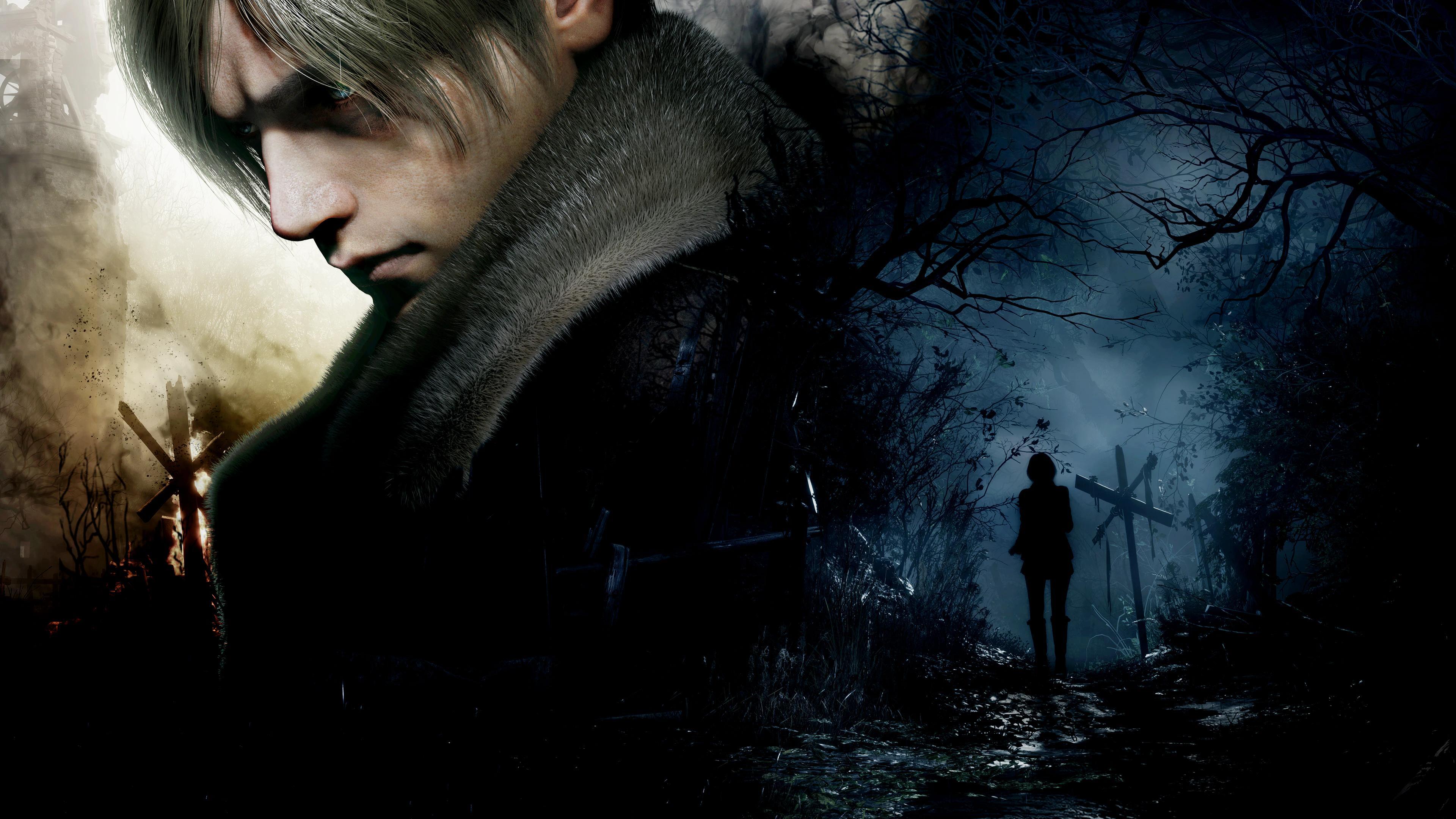
Datamined game files from the PlayStation 5 release of Resident Evil 4 Remake reveal 671 unused voice lines and animations that establish a direct narrative link to Resident Evil Village. Concurrently, original Resident Evil 2 director Hideki Kamiya has stated in a recent interview that modern survival horror games have surpassed his personal threshold for fear, rendering them unplayable for him due to advanced graphic fidelity.
Unused PS5 Files and Cut Content
Modder Keff0 extracted the assets exclusively from the physical PS5 launch disc, as the files are missing from the PC release. Among the assets are finished voice lines and subtitles featuring an explicit reference by the Merchant to The Duke from Resident Evil Village. Additional uncovered data includes unused animations that permit players to permanently kill the Merchant during campaign progression.
The presence of these fully recorded lines and programmed mechanics confirms that Capcom planned deeper narrative and interactive crossovers between the two titles before cutting them prior to the remake's final release. The data indicates that integration between modern franchise entries was evaluated further into development than previously known.
Industry Veteran Reaction
While dataminers uncovered cut connective tissue between recent franchise installments, Hideki Kamiya addressed the psychological toll of contemporary horror design in an interview with VGC. Kamiya admitted he avoids scary movies and cannot finish modern horror games due to extreme technological realism making the experiences too frightening.
Kamiya proposed the inclusion of a dedicated non-horror mode in upcoming franchise entries, such as the hypothetical Resident Evil Requiem, to accommodate players who appreciate the core mechanics but struggle with extreme tension.
These developments illustrate an ongoing tension within the survival horror genre between expanding narrative continuity and managing player accessibility. While Capcom continues to test narrative boundaries through interconnected game lore, industry veterans like Kamiya highlight the alienating effect that hyper-realistic graphics and relentless tension can have on certain segments of the audience, including creators themselves.
This divergence in how horror is experienced and produced points toward a broader design challenge for Capcom and other AAA developers. As graphical fidelity improves and spatial audio becomes more immersive, the physiological response elicited by games like Resident Evil shifts from suspense to genuine dread. The discovery that developers actively weighed introducing mechanics as drastic as permanently eliminating a beloved hub character like the Merchant suggests that Capcom experimented with high-stakes player agency that ultimately disrupted the intended pacing or tone. Balancing these ambitious narrative crossovers with broader audience comfort remains a delicate endeavor for modern game directors.