AMD has detailed its upcoming enterprise hardware lineup centered on the Ryzen AI Max and Threadripper Halo architectures, targeting local execution of massive language models. The hardware ecosystem spans compact 2-liter mini-workstations up to liquid-cooled deskside towers designed to circumvent cloud infrastructure dependencies for developers and enterprise clients.
Ryzen AI Max Mini-PCs
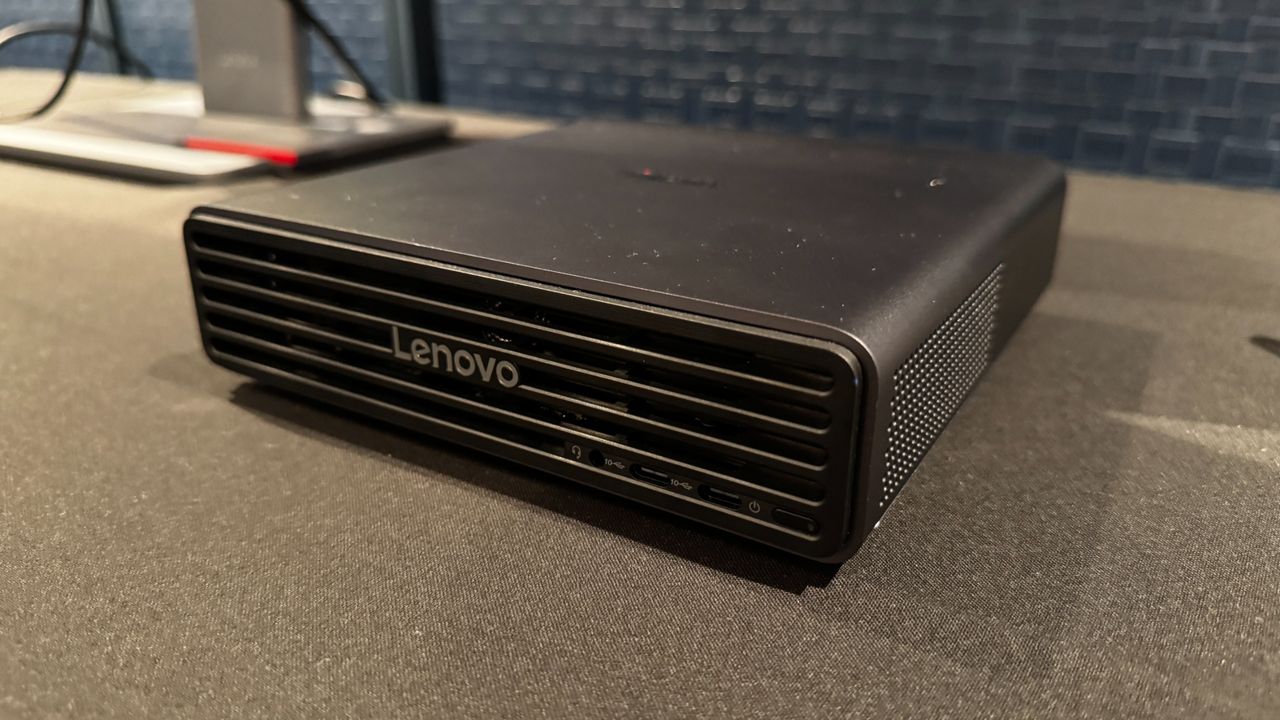
Acemagic leads the compact form-factor deployments with its new mini-workstation, built around the 16-core AMD Ryzen AI Max+ PRO 495 APU. The processor integrates Radeon 8065S graphics alongside a dedicated Neural Processing Unit delivering 55 TOPS of inference performance.
The system accommodates up to 192GB of LPDDR5X memory directly within its 2-liter chassis. Expansion capabilities include OCuLink interfaces for external high-bandwidth peripherals, providing scalable I/O for local data processing and model fine-tuning tasks without requiring a full tower configuration.
Threadripper Halo Workstations
At the high end, AMD introduced the Threadripper Halo Station, a liquid-cooled deskside system engineered for trillion-parameter AI workloads. The workstation pairs a 96-core AMD Threadripper PRO 9995WX processor with up to 2TB of 8-channel DDR5 RDIMM system memory.
Graphics and parallel compute acceleration are handled by up to four Instinct MI350P GPUs integrated into the same architecture, supplying a collective pool of 576GB of HBM3e memory. This configuration yields a total system memory footprint reaching 2.6TB, placing local compute capabilities on par with rack-mounted server nodes.
These deployments provide modular, on-premises alternatives to cloud-based AI pipelines. The Ryzen AI Max systems target local edge deployment and intermediate development, while the Threadripper Halo architecture—scheduled for a commercial launch in 2027—aims to directly challenge enterprise deskside solutions like NVIDIA’s DGX Station by keeping massive parameter models entirely within local network boundaries.
Beyond the raw specifications, the strategic pivot toward these high-density local systems represents a fundamental shift in how enterprises manage data sovereignty and latency. By moving away from the "cloud-first" mandate that has dominated the AI landscape for the past several years, AMD is betting that the next wave of corporate adoption will prioritize the security and cost-predictability of on-premises hardware. The inclusion of the 55 TOPS NPU in the Ryzen AI Max series specifically addresses the need for real-time, low-latency inference in professional workflows, allowing developers to iterate on complex models without the recurring overhead of cloud API calls.
The Threadripper Halo Station, in particular, serves as a bridge for research institutions and data scientists who require server-grade performance without the logistical burden of a dedicated data center rack. By consolidating 576GB of HBM3e memory alongside massive CPU core counts, the system minimizes the data movement bottlenecks that typically plague training and fine-tuning cycles. This architecture is designed to handle the massive context windows required for modern generative models, ensuring that proprietary datasets remain behind a company’s own firewall.