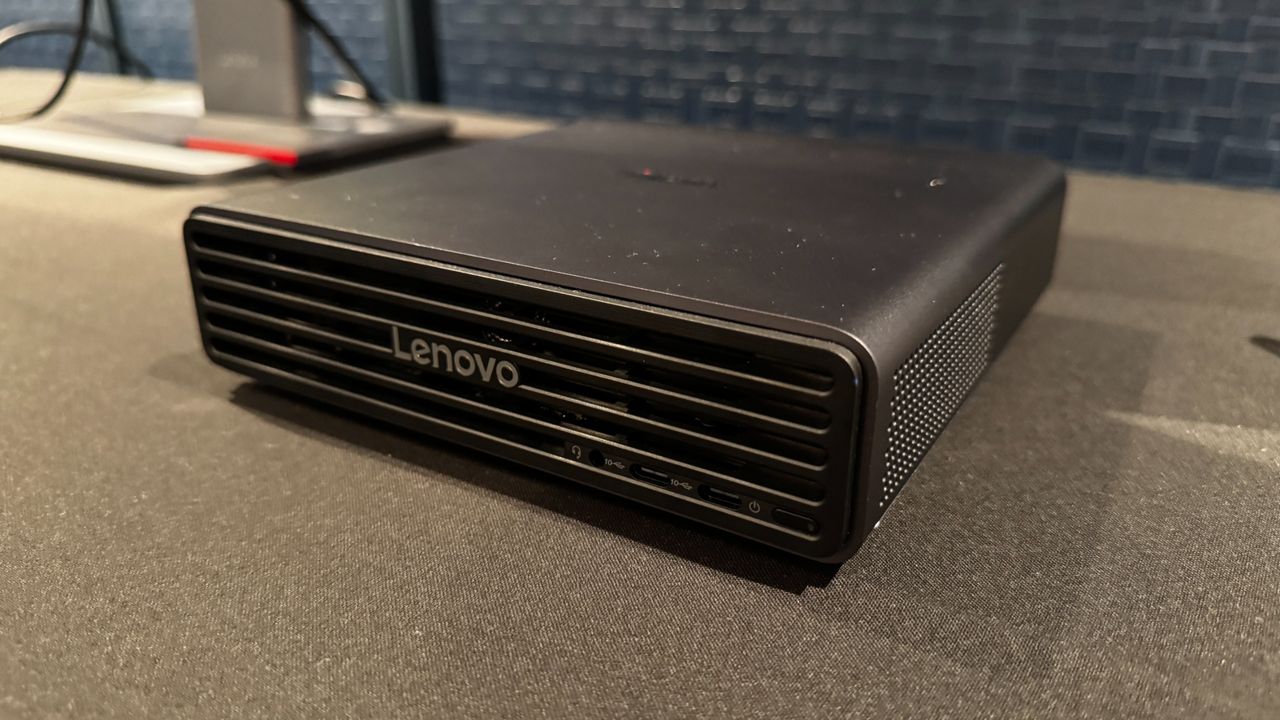
Microsoft has introduced Project Zenith alongside Acemagic’s hardware reveal, marking a hardware-software push for local AI development. Project Zenith is a specialized build of Windows 11 tailored specifically for AI developers, coming pre-configured with essential programming environments. Simultaneously, Acemagic showcased the Gorgon Halo mini-PC at IFA 2026, a compact workstation built to handle heavy on-device computational loads.
Optimized Software Infrastructure
Project Zenith streamlines the setup process for machine learning engineers by integrating development utilities directly into the operating system. The platform ships with pre-installed tools including Visual Studio Code and GitHub Copilot, removing manual configuration hurdles. However, the system architecture demands substantial resources to function. Microsoft specifies a minimum requirement of 64 GB of unified memory, placing the OS squarely in the high-end workstation tier.
Compact High-End Hardware
To support resource-intensive environments like Project Zenith, Acemagic engineered the Gorgon Halo mini-PC around AMD's Strix Halo architecture. Measuring 158.5 x 158.5 x 81.5 mm, the chassis houses an AMD Ryzen AI Max+ PRO 495 APU. This processor utilizes a 16-core Zen 5 CPU configuration paired with high-capacity memory support. The machine accommodates up to 192 GB of LPDDR5X RAM, satisfying Microsoft's memory prerequisites for local model execution.
The integrated hardware architecture delivers a combined processing yield of 131 TOPS across its CPU, GPU, and NPU components. This level of throughput enables engineers to bypass external cloud infrastructure for medium-scale model operations.
Running machine learning models locally on these systems allows developers to execute inference and fine-tuning routines on parameters exceeding 30 billion without incurring tokenized cloud billing fees. Despite the long-term operational savings on API calls, the immediate capital expenditure remains steep. The requirement for 64 GB to 192 GB of high-speed memory and specialized APUs establishes a costly barrier to entry for independent developers and smaller studios adopting local AI workflows.
Beyond the immediate financial implications, the shift toward local-first AI development reflects a broader industry trend of prioritizing data sovereignty and privacy. By keeping sensitive datasets and proprietary models on-device, organizations can mitigate the risks associated with transmitting intellectual property to third-party cloud providers. This "air-gapped" approach to machine learning is increasingly critical for sectors handling sensitive medical, financial, or defense-related information, where data residency requirements often preclude the use of public LLM APIs.
Furthermore, the integration of the Ryzen AI Max+ PRO 495 APU within a sub-two-liter chassis suggests that the industry is moving away from the need for massive, power-hungry rack servers for initial model testing. The 131 TOPS of performance provided by the Gorgon Halo represents a significant leap in efficiency, allowing for rapid iteration cycles that were previously tethered to workstation-class GPUs. As Project Zenith matures, the ecosystem is expected to expand, potentially lowering the barrier to entry as manufacturers optimize thermal management and power delivery for these high-density components.